
EV vs Gas vs Hybrid: Which Is Cheaper to Own Long-Term?


Choosing a new car today isn’t as simple as comparing colors and trim levels. With rising fuel prices, federal tax credits for electric vehicles, and the popularity of hybrids, many drivers are asking: EV vs Gas vs Hybrid, which is cheaper to own long-term?
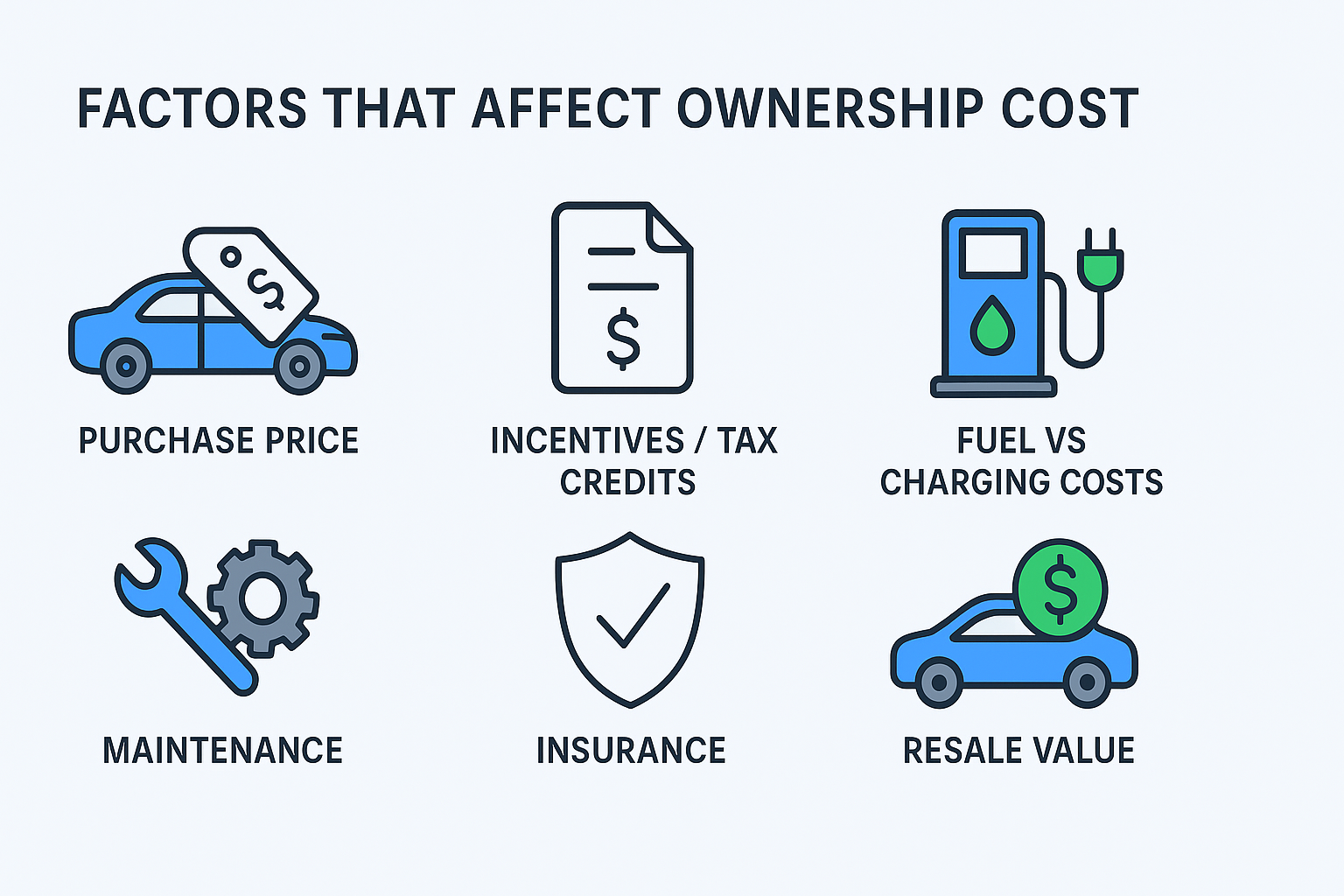
The answer depends on several factors: purchase price, incentives, fuel or charging costs, maintenance, insurance, and resale value. Let’s break down the costs of ownership for gas, electric, and hybrid cars so you can make an informed financial decision.
EV vs Gas vs Hybrid Cost of Ownership Explained
Before diving into the numbers, here’s a quick overview of how EV vs Gas vs Hybrid vehicle works:
-
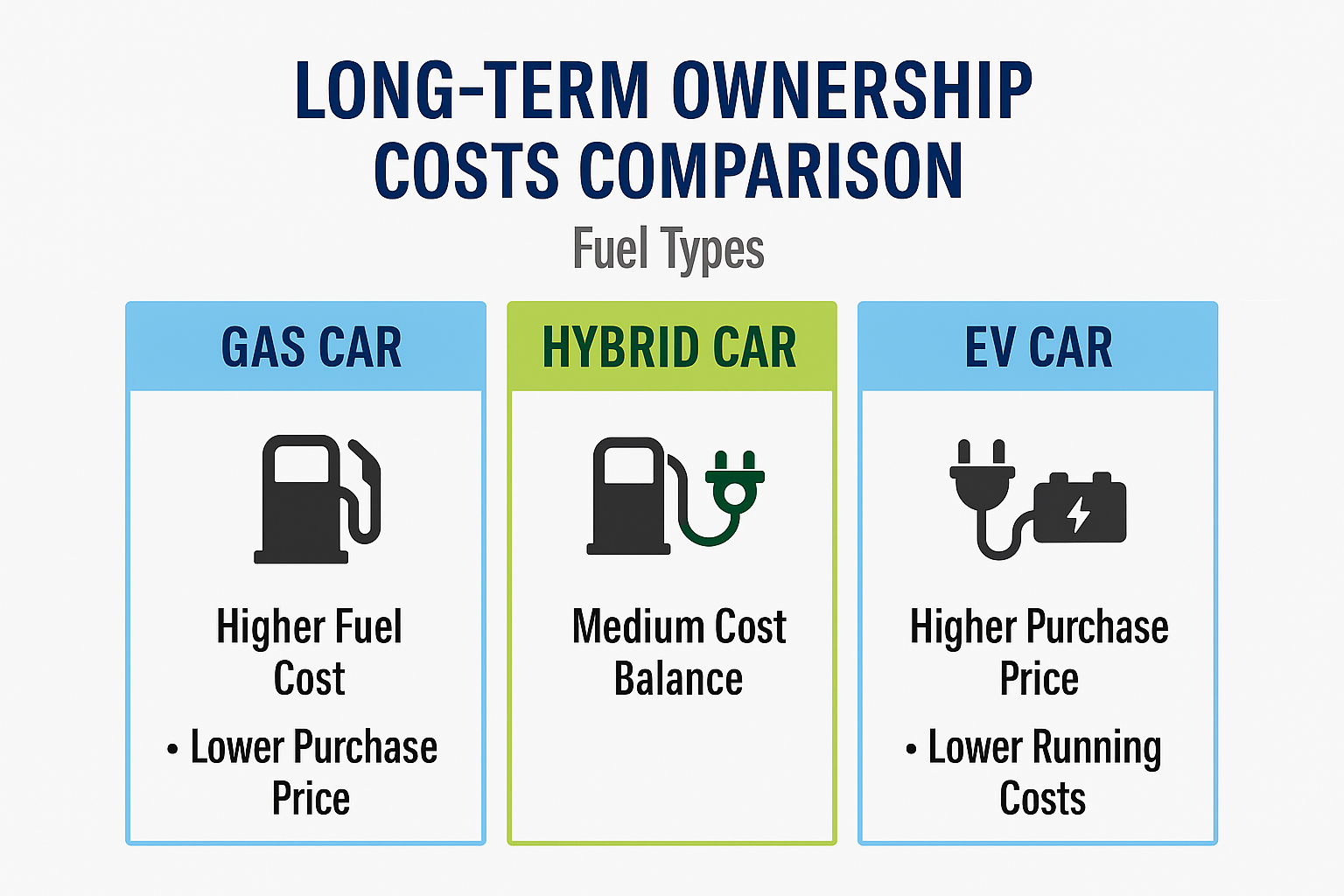
Gas-powered cars: Traditional models with combustion engines. They usually have the lowest sticker price but higher fuel and maintenance costs.
-
Electric vehicles (EVs): Fully powered by electricity, producing zero tailpipe emissions. Higher upfront costs, but significant savings on fuel and maintenance.
-
Hybrids: Combine a gas engine with an electric motor. They deliver strong fuel economy and moderate purchase prices, making them a middle ground.
Your total cost of ownership depends on how much you drive, local fuel/electricity costs, and whether you qualify for incentives.
Purchase Price and Incentives
According to Kelley Blue Book (2025), the average new car in the U.S. costs around $48,000.
-
Gas cars: Often the cheapest upfront, with many models priced between $25,000–$35,000. No incentives.
-
Electric vehicles: Average $53,000–$60,000. However, many qualify for the $7,500 federal EV tax credit and additional state rebates (California, Colorado, New York).
-
Hybrids: Fall in the middle, with popular models like the Toyota Prius starting in the low $30,000s. Some states still offer small rebates.
Takeaway: Gas is cheapest upfront. Incentives can make EVs competitive, while hybrids strike a balance.
Fuel & Charging Costs
Fuel and charging are major long-term cost drivers.
-
Gas cars: With national gas prices averaging $3.50 per gallon (AAA, 2025), a driver covering 12,000 miles in a 30-mpg vehicle spends about $1,400 per year on fuel.
-
Electric vehicles: According to the U.S. Department of Energy, EVs cost the equivalent of $1.20 per gallon to “fuel.” Home charging adds up to about $500–$600 annually for the same mileage. Public charging costs vary but usually remain cheaper than gas.
-
Hybrids: A 55-mpg Prius uses about 218 gallons/year, or $760 at current prices.
Takeaway: EVs save the most on “fuel,” hybrids save moderately, and gas cars cost the most. Over five years, EV drivers can save $4,000 to $5,000 compared to gas.
Maintenance and Repairs
This is where the electric vs gas car long-term cost becomes very clear.
-
Gas cars: Require frequent oil changes, spark plugs, transmission servicing, and engine repairs as they age.
-
Electric vehicles: With fewer moving parts, EVs often eliminate the need for oil changes and many common repairs. AAA estimates EVs cost 30–40% less in annual maintenance. The main risk: battery replacement ($8,000–$15,000), though most last 8–12 years and come with extended warranties.
-
Hybrids: Require some traditional service (oil changes), but less frequently. They have more systems (gas + electric), which may mean additional repair costs later in life.
Takeaway: EVs are the cheapest to maintain on a day-to-day basis, but battery cost is a long-term concern. Gas is most expensive overall.
Insurance and Reliability
Insurance
-
Gas cars: Cheapest to insure due to lower repair complexity.
-
EVs: Can cost 15–20% more to insure because of specialized parts and repair costs. Premiums are gradually falling as EV adoption rises.
-
Hybrids: Often fall in between.
Reliability
-
EVs: Fewer moving parts = fewer breakdowns.
-
Hybrids: Proven track record (Toyota Prius = over 20 years of reliability).
-
Gas cars: Dependable when new, but they require more maintenance with increased mileage.
Resale Value and Longevity
Resale value plays a significant role in determining the ownership costs of hybrid, electric, and gas vehicles.
-
Gas cars: Resale values are weakening as EV adoption grows.
-
EVs: Once dropped sharply, but now improving, Tesla models hold extreme value.
-
Hybrids: Among the best resale performers, thanks to reliability and broad consumer demand.
Environmental & Lifestyle Benefits
-
EVs: Ideal for city/suburban drivers with access to charging. Zero emissions, quiet, and cheaper to run.
-
Hybrids: Perfect for mixed driving, fuel-efficient without needing full-time charging.
-
Gas cars: Still practical for rural drivers, heavy-duty needs, or areas with limited charging infrastructure.
Conclusion: Which Is Cheaper Long-Term?
So, which is cheaper to own long-term: gas, electric, or hybrid?
-
Gas cars: Lowest upfront price, but rising fuel and maintenance costs make them expensive over time.
-
Hybrids: Balanced choice. Moderate upfront costs, substantial fuel savings, excellent resale value.
-
Electric vehicles: Although they have a higher purchase price, with federal tax credits, fuel savings, and lower maintenance, EVs often end up thousands of dollars cheaper over the long run.
The right choice depends on your driving habits, location, and access to incentives. For many U.S. drivers, hybrids and EVs now offer the most substantial financial and environmental value.
If you’re weighing the EV vs Gas vs hybrid cost of ownership, the math shows EVs deliver the most significant long-term savings, while hybrids remain the best middle ground.